
October 5, 2026
What is dementia, and how can we support the people who live with it?
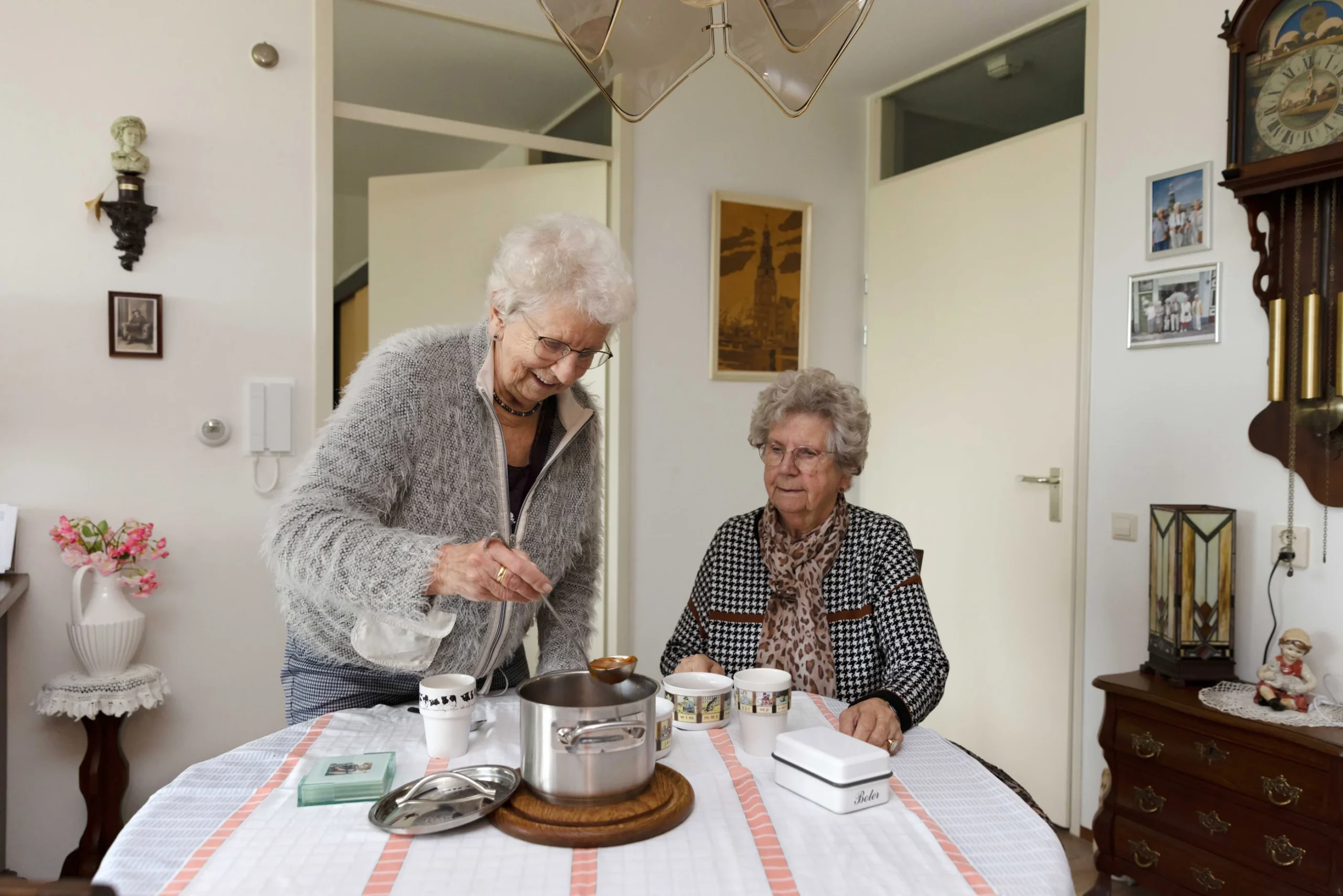
Ukrainian professionals working in residential care institutions told us that they meet residents every day who experience memory loss, confusion and changes in behaviour, and that they would like to understand these symptoms better.
That is why SOFT tulip, together with the Ministry of Social Policy of Ukraine, has organised two in-depth online sessions on dementia care. They are led by Dutch experts from Lelie Zorggroep. The sessions were given by Melanie de Weger, psychologist at Lelie zorggroep. Below we share the key insights.
What is dementia?
Dementia is often reduced to ‘memory problems’. In reality, it changes much more: how a person perceives the world, how they feel and how they respond to others. Understanding these changes helps us see, behind ‘difficult behaviour’, a person who is frightened, lonely and looking for safety.
We speak of dementia when unexplained behaviour turns out to be the result of irreversible changes in brain tissue. Memory, language, the ability to carry out actions, recognition of people and objects, and logical thinking gradually decline. Personality changes, and everyday life is disrupted.
A person may have difficulty with activity and orientation, lose familiar social norms of behaviour, and experience confusion, delusions or hallucinations.
How it feels from the inside
People with dementia are aware that something strange is happening to them. Because of progressive memory loss, a person feels cut off, abandoned, lonely and unprotected. This leads to a search for safety: some people keep searching for something, others cling to those around them. Suspicion, resistance, restlessness, mood swings, sadness and fear become easier to understand when we look at them this way.
In dementia, memory for facts declines, but the brain compensates for this loss by intensifying emotional life. Emotions come to the foreground, are felt more strongly and expressed more openly.
Looking at behaviour from another angle
What we call “problem behaviour” is often a normal reaction to losing abilities. Anger has a positive side too: you don’t have to guess what the person is feeling. Suspicion is an attempt to save face. Fear is a normal reaction to no longer understanding your surroundings. Sadness, grief and depression are normal reactions to an abnormal event.
People around them tend to suppress negative feelings as quickly as possible. But ups and downs are part of life, and making room for feelings allows a person to feel that they are alive.
Looking at the positive side
Alongside the losses, dementia can also bring more joy, more pleasure and more love. There is sincerity in contact, an intuitive way of living with ‘sensitive antennae’ and the ability to live in the here and now.
Beyond basic needs such as food, drink, closeness and sexuality, psychosocial needs play an important role. The further dementia or another illness progresses, the more important these needs become.
Where we, as carers, go wrong
Often with the best intentions, we do everything for the person and in doing so undermine their needs. Overprotective care and lecturing, safety above all else, a monotonous range of activities, and a building that creates obstacles all have consequences we don’t notice: excessive dependence on care, a high risk of inactivity and depression, and more behaviour that is hard to manage.
Types of dementia
Alzheimer’s disease is the most common form, accounting for 60–70% of cases. It begins with memory problems, and symptoms worsen gradually. The person has increasing difficulty remembering, judging situations, carrying out actions, recognising objects and faces, and understanding and using language. Behaviour, character and mood may change.
Vascular dementia is caused by problems with blood supply to the brain, for example after a TIA or stroke, and affects about 16% of people with dementia. The ability to take in information fluctuates, the course is hard to predict, and decline comes suddenly, in large or small steps. People remain aware of the consequences of the illness for a long time, which often affects their mood.
Dementia with Lewy bodies is relatively rare. It is characterised by signs of parkinsonism (tremor, stiffness, slowed movements, stooped posture, altered gait), strong fluctuations, periods of confusion and visual hallucinations. Memory and the ability to carry out actions usually remain intact for a long time. People with this form are very sensitive to side effects of antipsychotics.
Frontotemporal dementia often starts at a younger age, between 40 and 60, and begins unnoticed. It affects the front part of the brain, which governs behaviour and actions, so changes in behaviour and personality appear early. The person does not foresee the consequences of their actions, sticks to fixed patterns and loses flexibility. Memory and orientation are initially preserved, while awareness of the illness fades quickly.
How to communicate with a person with dementia
To break through the fog of dementia, we need to make an extra effort to make contact. We cannot expect that extra effort from the person with dementia.
First make eye contact and introduce yourself. Speak simply, in short sentences, and not too fast. Ask one question at a time, preferably one that can be answered with “yes” or “no”. Pay attention to how the person reacts, acknowledge their feelings and take them seriously. Get to know the person, show genuine interest and don’t hold back on compliments. And don’t quiz them about facts and events: it only highlights what they have lost.
When something raises concern
If something about a person without a diagnosis raises concern, observe and record the changes: in memory, the appearance of delusions or hallucinations, agitated, anxious, depressed, apathetic or disinhibited behaviour, irritability, aimless repetitive actions, restlessness at night and changes in appetite. These observations help professionals understand what is going on.